HVAC tapes are typically constructed with an adhesive and a backing. Some may also require a liner to ensure the tape doesn’t stick to itself. Each part of the tape’s construction plays a vital role in its performance.
Backings aren’t just for aesthetic appeal. They are also important for the convenience of the job and the protection of the tape’s adhesive. Ultimately, the type of application in which the tape will be used helps determine which backing to choose.
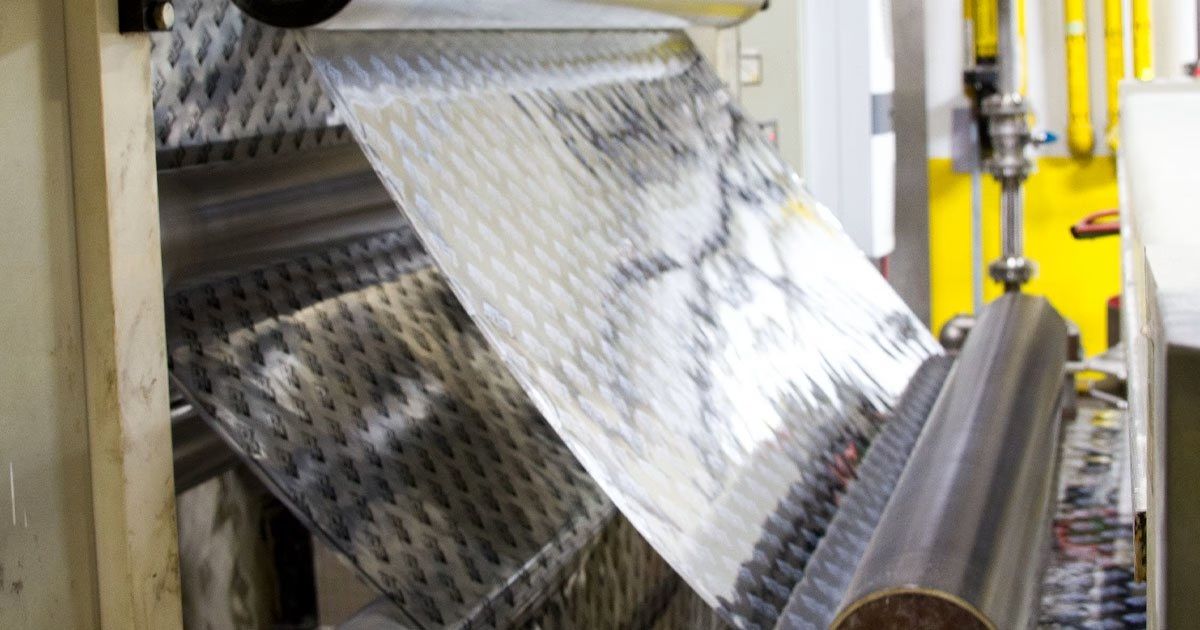
Film: A film backing has high elongation, meaning it can be stretched without breaking and is very conformable, making it a great fit for tapes that are used to seam materials that are wrapped around odd shapes, applied to uneven surfaces or used on tight corners. Tapes used to seam housewrap material or seam insulation material around ductwork are often made with a film backing. Film backings also provide good electrical insulation and protection, so they are often used to make electrical and line set tapes.- Foil: With good flame retardant properties, foil can be a pretty strong, sturdy material depending on the mil thickness, making it a good choice for tapes that are used on ductwork, sheet metal and insulation materials. Foil also inherently acts as a barrier against water and vapor transmission, which is another reason why it is commonly used for applications on both rigid and flexible duct work.
- Cloth: Cloth backings are very conformable and versatile. They can be treated to allow waterproof characteristics for outdoor applications. And, depending on how tightly the cloth is woven, can also be highly resistant to tears and punctures. Cloth tapes are an excellent choice for general repair
tapes (i.e. standard duct tapes), as well as for general HVAC applications such as sealing, seaming and joining.
Depending on the job, more than one type of tape may be needed to achieve full system closure. Be sure to follow the manufacturer’s suggested usage and application guidelines for the best results.