How to properly apply and remove painter’s tape
- Start by making sure your surfaces are dust and debris-free, these particles can prevent a tape from bonding properly with the surface, resulting in messy paint lines.
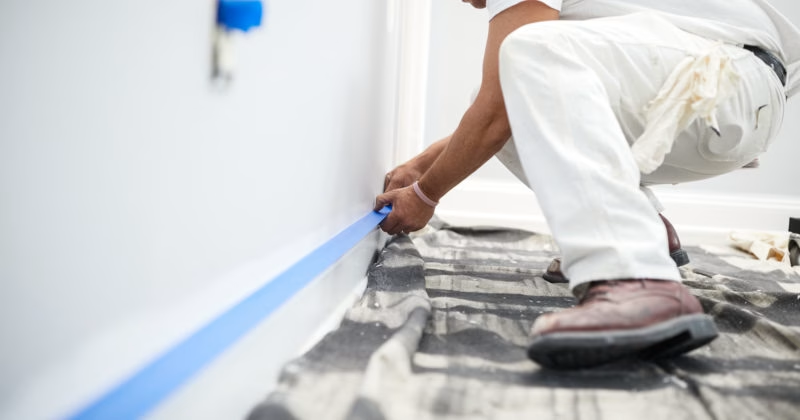
- Next, keep the roll flat against the wall, so that you only cover the trim without getting any tape on the wall. New painters should try pulling off the tape in smaller sections in order to ensure a straight line and avoid stretching the tape.
- You will then eliminate all gaps and seal the edges in the tape by rubbing a firm, plastic tool or card, along your tape – often referred to as “burnishing.”
- Finally, remove the tape by pulling it backwards slowly, at a 45 degree angle in order to achieve crisp, professional-looking lines.
It is important to make sure the paint has not bonded with the tape, as this can result in an uneven edge when the tape is removed, taking pieces of paint with it. To prevent this, use a razor blade to break the bond between the tape and the paint, then pull back slowly. If you notice any tearing, this is generally a sign that you are pulling the tape too fast.